The Real Search Engine Ranking Factors That Matter in 2024
What Actually Moves the Needle in Search Rankings?
I have been working in SEO for over a decade, and if there is one thing I have learned, it is that the list of search engine ranking factors changes faster than most people can keep up. Every year someone publishes a new study claiming to have cracked the code, but the truth is messier. Google updates its algorithm thousands of times annually, and what worked last quarter might get you flagged tomorrow. So how do you separate the signal from the noise?
After spending years auditing sites, running experiments, and watching competitors rise and fall, I have come to see that the fundamentals hold steady even as the details shift. The search engine ranking factors that truly drive performance are not secrets. They are grounded in how people actually use the web and how Google tries to satisfy that behavior. Let me walk you through what I have found matters most, and what you can safely deprioritize.
Content Relevance and Search Intent
If you ask ten SEOs what the number one factor is, nine will say content relevance. I agree, but with a caveat. It is not just about having a page that matches a query. It is about matching the search intent behind that query. Google has gotten frighteningly good at understanding whether someone wants to buy something, learn something, or compare options. If you target a transactional keyword with an informational article, you will lose almost regardless of how good your writing is.
I once worked with a client who sold ergonomic chairs. They had a beautifully written guide on office posture that ranked well for the broad term "office chair tips." But when we looked at their conversion data, the traffic was bouncing fast on product pages. The problem was that visitors arriving from informational queries had no interest in buying yet. We shifted the content strategy to match search intent more precisely, creating separate pages for comparison shoppers, ready-to-buy visitors, and people just doing research. Within three months, organic revenue doubled.
Content relevance also ties directly to keyword density, though not in the way old-school SEOs think. You no longer need to hit a magic percentage. In fact, forcing keywords into every paragraph hurts readability and can trigger spam filters. Instead, focus on covering the topic comprehensively. Use related terms naturally. Google’s algorithms understand synonyms and context. If your page on coffee machines mentions brewing temperature, grind size, and pressure, it signals relevance without repeating the exact phrase a dozen times.

Technical Foundation: Core Web Vitals and Beyond
You can write the best content in the world, but if your site loads like a slideshow from 1998, you will not hold anyone. Core Web Vitals became a ranking signal in 2021, and they have only grown in importance. These metrics measure loading performance, interactivity, and visual stability. In practice, that means your pages need to load quickly, respond to taps and clicks without delay, and not jump around as elements render.
Site speed is the most obvious part of user experience, but it is not the only technical factor. Mobile-first indexing means Google primarily uses the mobile version of your site for ranking and indexing. If your mobile pages are stripped down or broken, your desktop rankings will suffer too. I have seen sites lose half their traffic overnight after a poorly executed mobile redesign. Test your site on a real phone, not just a browser resize.
Beyond speed and mobile readiness, there are structural elements that quietly influence how well Google understands your pages. Schema markup helps you provide explicit clues about what your content means. A recipe page with proper schema can appear in rich results with star ratings, cook time, and calorie counts. That extra real estate in search results often lifts click-through rates by 20 to 30 percent. Similarly, canonical tags prevent duplicate content issues when the same product appears under multiple URLs. Get these wrong, and you are wasting crawl budget on pages that should not even be indexed.
Robots.txt and canonical tags might seem like back-end details, but they directly affect how search engines interact with your site. A misconfigured robots.txt file can block important pages from being crawled. I once helped a startup that had accidentally blocked their entire blog section. They had no idea why new articles were not appearing in search. A five-minute fix brought their content back into the index.
Links: Backlinks, Page Authority, and Anchor Text
Backlinks have been a cornerstone of search engine ranking factors since the early days of Google PageRank. The concept is simple: when other sites link to yours, it acts as a vote of confidence. But not all votes are equal. A link from a high-domain-authority site like a major news outlet carries far more weight than a dozen links from low-quality directories. Domain authority and page authority are metrics created by tools like Moz and Ahrefs to approximate this value. They are not official Google metrics, but they correlate strongly with rankings.
I have seen people obsess over getting any link they can, but that strategy backfires more often than not. Google’s algorithm is good at spotting unnatural link patterns. A sudden spike in links from irrelevant sites, or links with over-optimized anchor text, can trigger manual penalties. Anchor text should describe what the linked page is about, not stuff a keyword. For example, a link reading "click here" does nothing for your rankings, while one that says "detailed guide to site speed optimization" passes both relevance and value.
Building backlinks worth having takes time. It usually involves creating genuinely useful resources, reaching out to industry peers, or earning coverage through PR. There is no shortcut that lasts. Every time I have seen a client buy links or participate in link schemes, the initial boost was followed by a painful recovery after Google caught on.
User Experience and Engagement Signals
User experience is not just a buzzword. It directly influences how people interact with your site, and those interactions feed back into search engine ranking factors. If visitors click on your result, then immediately hit the back button to try another listing, Google interprets that as a sign that your page did not satisfy the query. This behavior, often called pogo-sticking, can hurt your rankings over time.
Good user experience means clear navigation, readable fonts, and a layout that works on any screen size. It also means your content delivers what the title and meta description promised. If you write a headline like "10 Proven Ways to Improve Site Speed" and then spend the first three paragraphs talking about the history of the internet, people will leave. Respect their time. Get to the point.
Google E-A-T (Expertise, Authoritativeness, Trustworthiness) is another lens through which Google evaluates content, especially for topics that could affect a person’s health, finances, or safety. You do not need a PhD to rank for most queries, but you do need to demonstrate real knowledge. That means citing sources, including author bios, and keeping information up to date. I refresh my own old articles every six months, and I often see a traffic bump afterward.
Tools That Help You Measure and Improve
You do not have to guess how your site is performing. Tools like Google Search Console give you direct data on which queries bring traffic, how often your pages appear in results, and whether there are indexing issues. Ahrefs and Moz offer deeper analysis of backlinks, keyword rankings, and competitor strategies. But here is the thing: tools are only useful if you act on the data. I have seen people spend hours staring at dashboards without making a single change to their site.
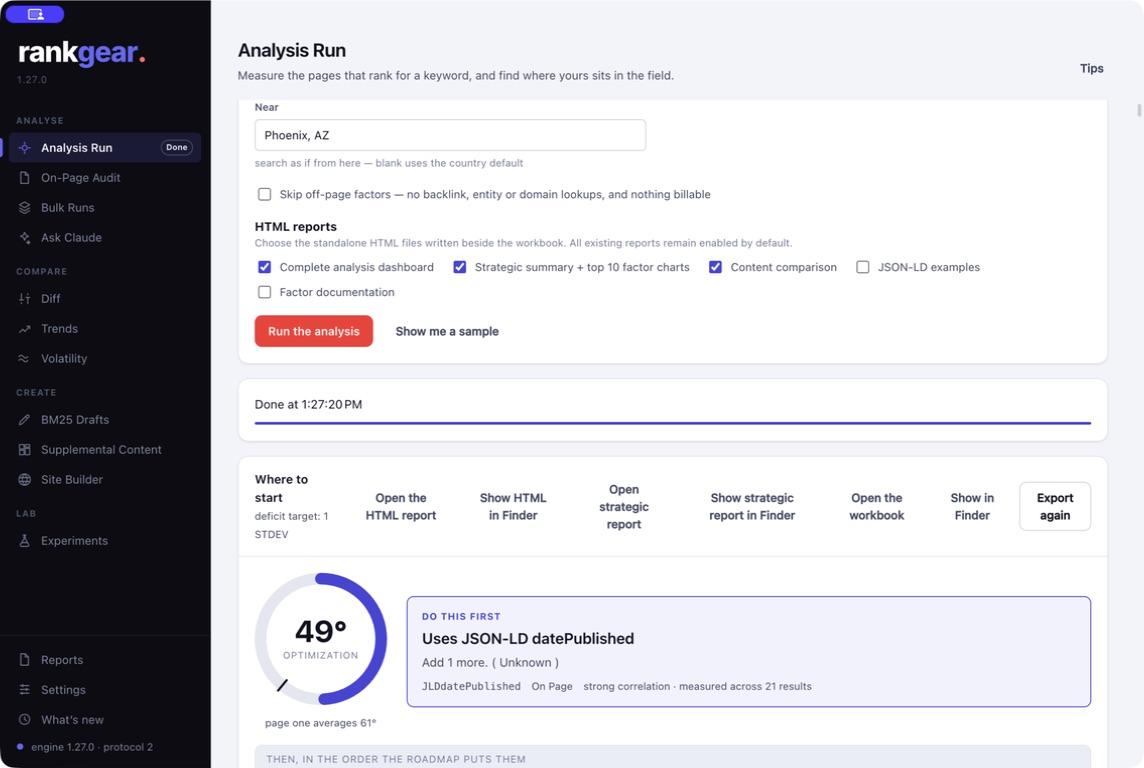
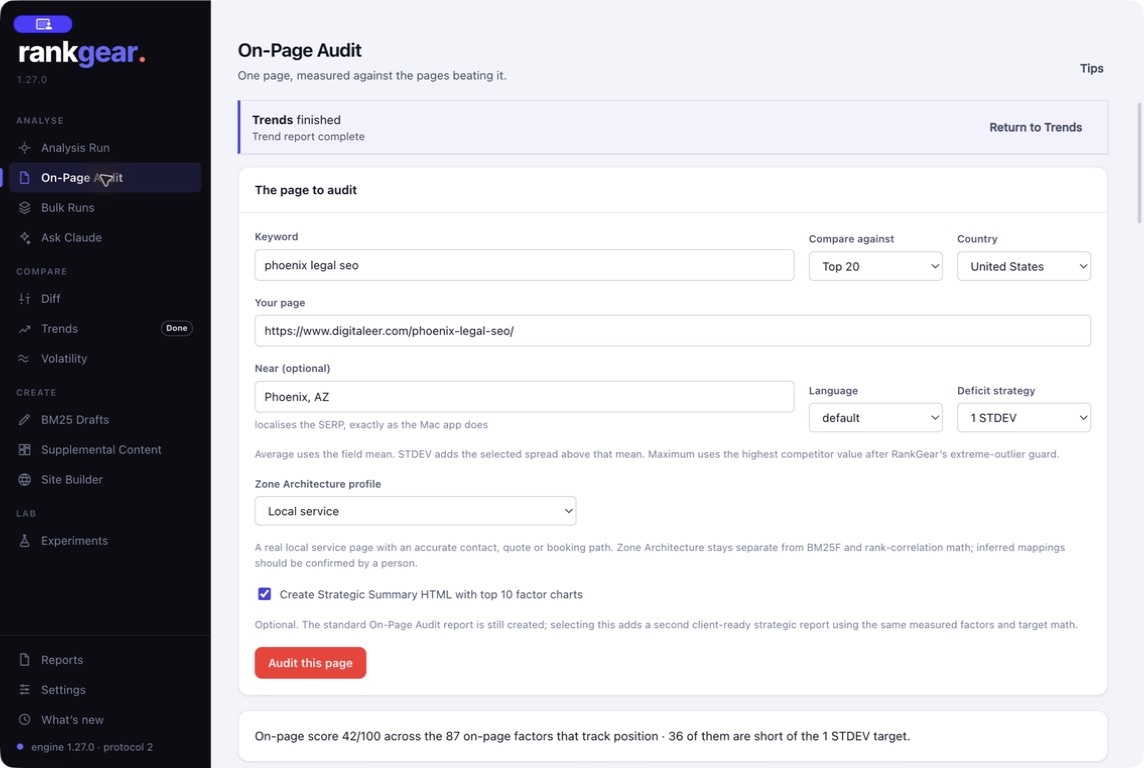
RankGear takes a different approach. Instead of just showing you a list of metrics, it analyzes which search engine ranking factors actually influence your specific queries and then generates an optimization plan. That kind of targeted guidance is rare in an industry full of generic checklists. If you are tired of guessing, it is worth a look.
What About Old Factors That No Longer Matter?
Some ranking factors have faded in importance. Keyword density, for example, used to be a major lever. You could stuff a page with the same phrase twenty times and watch it climb. That approach does not work anymore, and it can actually hurt you if Google interprets it as spam. Similarly, exact-match domains once gave a big boost. Owning bestcheapwidgets.com for a widget review site used to be a shortcut. Now Google treats exact-match domains with more skepticism, especially if the site itself is thin.
PageRank in its original form is gone. The public toolbar version disappeared years ago, and the internal algorithm has evolved well beyond counting links. But the underlying principle that links represent trust still holds. The difference is that Google now evaluates the context and quality of each link with far more sophistication.
Final Thoughts on Staying Sane
SEO can feel like a moving target, but the core truth remains: build a site that serves people well, and you will likely rank well. Obsess over user experience, write content that matches search intent, earn honest backlinks, and keep your technical foundation solid. The search engine ranking factors that matter are the ones that align with what a real human being would find useful. When you focus on that, the algorithm tends to follow.
If you take one thing away from this article, let it be this: do not chase every new factor that someone posts about on LinkedIn. Stick to the fundamentals, measure your results, and adjust based on data, not hype. That approach has served me well through dozens of algorithm updates, and it will serve you too.